
That tight, swollen feeling after a meal can turn a normal workday, flight, or weekend break into pure discomfort. If you are searching for how to relieve stomach gas and bloating instantly, the goal is simple: reduce trapped air, calm digestion, and avoid making the pressure worse in the next few hours.
For most people, gas and bloating come from swallowing air, eating too fast, constipation, highly fermentable foods, or a digestive system that is under stress. The good news is that mild bloating often responds quickly to a few practical actions. The more important point is knowing when “instant relief” is realistic and when persistent bloating is a sign your gut needs more structured support.
How to relieve stomach gas and bloating instantly at home
Start with movement, not another meal. A short walk, even 10 to 15 minutes, can help stimulate digestion and move trapped gas through the intestines. If you are stuck at home or in a hotel room, gentle knee-to-chest stretches or lying on your left side may also help. Position matters because gas can shift with movement, and the left-side position often feels better when the abdomen is distended.
Heat can also be useful. A warm compress or heating pad over the abdomen may relax the muscles around the gut and reduce that crampy, pressurized feeling. This will not remove the cause, but it can make the discomfort settle faster.
If your bloating followed a large meal, pause the grazing. Many people keep nibbling because they feel “off,” but adding more food to a sluggish digestive system usually increases pressure. Sip water slowly instead. Carbonated drinks, even sparkling water, can make symptoms worse when gas is already trapped.
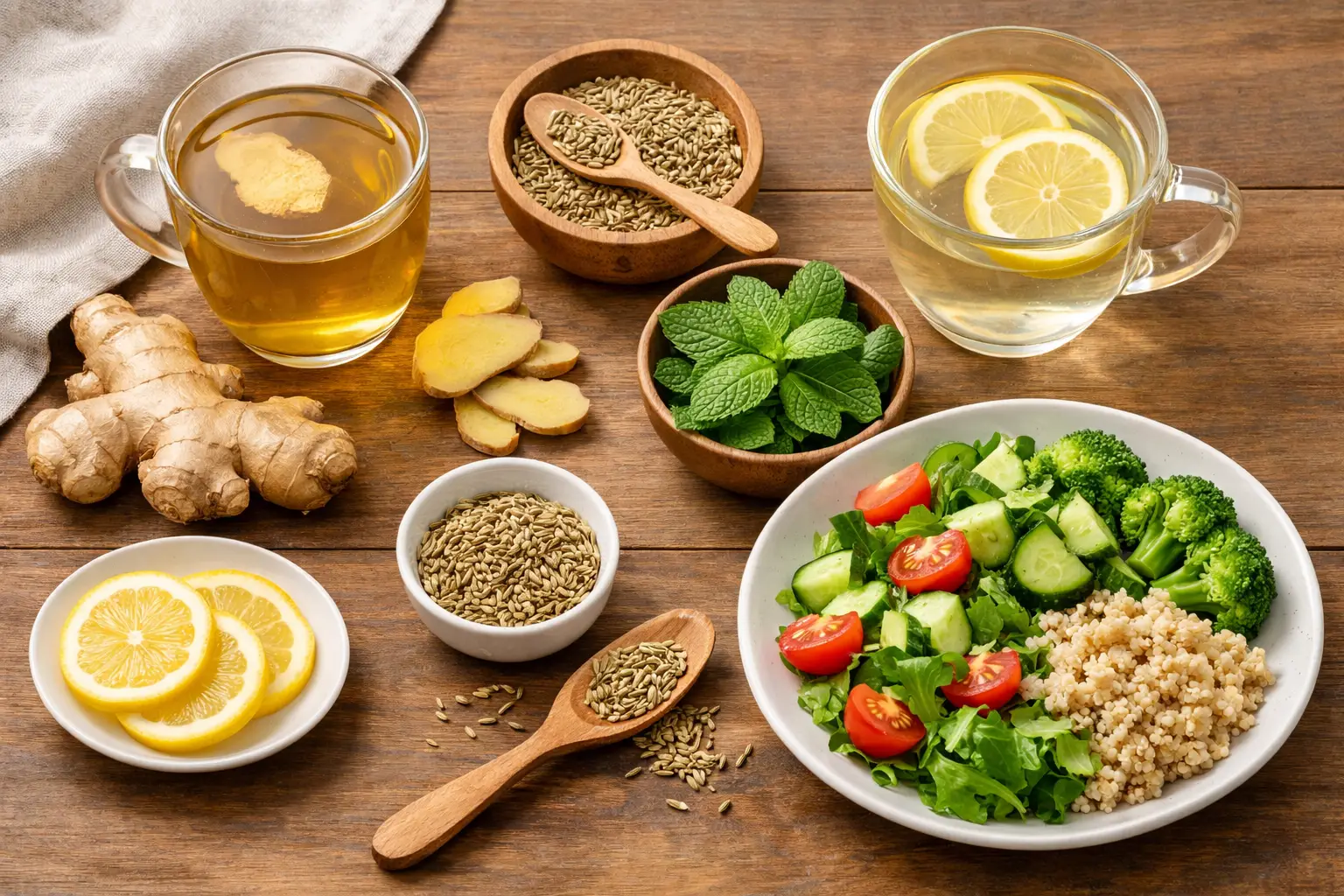
Peppermint tea or ginger tea may help some people feel relief within a short period. Peppermint can relax intestinal muscle, while ginger may support stomach emptying and reduce nausea. That said, peppermint is not ideal for everyone, especially if reflux is part of the picture, because it can relax the valve between the stomach and esophagus.
Fast stomach gas relief depends on the cause
Not all bloating is the same. If the main issue is swallowed air, often from eating fast, chewing gum, drinking through a straw, or talking while eating, the relief strategy is different from bloating caused by constipation or food intolerance.
When constipation is behind the pressure, relief may not be truly instant. Walking, hydration, and magnesium-rich foods may help, but if bowel movements have been slow for several days, the abdomen may stay bloated until that resolves. If a certain food triggered symptoms, such as beans, onions, dairy, or sugar alcohols, the discomfort may fade as digestion moves along, but it can take several hours.
This is why some people feel better quickly while others stay uncomfortable most of the day. The symptom is the same, but the root cause is different.
What to eat and drink when you feel bloated
When your stomach feels tight, keep the next few hours simple. Choose light, easy-to-digest foods if you are hungry. Plain rice, toast, bananas, broth-based soups, or cooked vegetables are often gentler than greasy food, heavy cream sauces, or very high-fiber meals.
What you avoid matters just as much. For immediate relief, skip carbonated drinks, beer, very salty takeout, large salads, fried food, and anything that usually makes you gassy. Raw cruciferous vegetables, large amounts of beans, and protein bars with sugar alcohols are common offenders.
A small amount of warm water can feel better than ice-cold drinks. Slowing down also helps. Eating in a rushed, stressed state can worsen bloating because the gut is more reactive when your nervous system is tense.
When over-the-counter options may help
Some people get quick relief from simethicone, which helps gas bubbles combine and pass more easily. It can be useful when the main problem is pressure from gas, though results vary. If lactose is your trigger, a lactase enzyme may help before dairy, not after symptoms are in full swing. If constipation is a frequent issue, fiber supplements can help long term, but they are not the best choice for instant relief and may worsen bloating in the moment if introduced too aggressively.
This is where a little honesty helps. Products marketed for “debloating” are often oversold. If you are severely bloated because of constipation, food intolerance, hormonal shifts, or stress-related digestive slowdown, no quick fix works every time.
How stress can make bloating worse
Busy professionals often notice that bloating gets worse during high-pressure weeks, long commutes, business travel, or irregular meals. That is not imagined. Stress can change gut motility, eating speed, bowel habits, and even how intensely you feel abdominal pressure.
A few minutes of slower breathing after meals may help more than expected. You do not need a full meditation session. Simply sit upright, loosen restrictive clothing, and take slow breaths for five minutes. This can reduce tension in the abdomen and support a calmer digestive response.
For some people, the bigger issue is not one heavy meal but a pattern of rushed eating, late dinners, poor sleep, and minimal movement. In that case, learning how to relieve stomach gas and bloating instantly is useful, but the real transformation comes from changing the daily rhythm that keeps triggering symptoms.
When bloating points to a deeper gut issue
Occasional bloating is common. Frequent bloating is information. If symptoms happen several times a week, keep returning after meals, or come with constipation, diarrhea, reflux, fatigue, or abdominal pain, it may be time to look beyond quick relief.
Common contributors include irritable bowel syndrome, lactose intolerance, sensitivity to fermentable carbohydrates, chronic constipation, and gut imbalance after periods of stress, poor diet, or travel. Retirees may also notice bloating becomes more frequent as digestion slows with age, medications change, or activity levels drop.
If you have red-flag symptoms such as vomiting, severe pain, unexplained weight loss, blood in stool, fever, or a suddenly hard swollen abdomen, do not wait it out. Those symptoms need medical evaluation.
A more structured reset for recurring bloating
If your bloating keeps coming back, short wellness programs can offer something a random supplement cannot: structure. A guided gut-health reset may include lighter meals, digestive rest, probiotic or enzyme support, gentle movement, hydration, and practical education that helps you identify triggers.
Some travelers compare standalone yoga holidays, spa stays, and detox-style retreats when looking for digestive support. Each has value, but the difference is in how much health guidance you receive. A yoga retreat can be excellent for stress relief and gut-calming routines. A wellness reset with practitioner input may be more useful when recurring bloating, fatigue, and food-trigger confusion are part of the problem.
For those considering a destination-based break, settings like Phuket can be especially appealing because a calm environment makes it easier to slow down meals, sleep better, move daily, and reduce the stress load that often aggravates digestive discomfort. Wellness Retreat Asia offers short-format retreat experiences designed for busy adults who want a time-efficient reset rather than an open-ended wellness vacation. If you want to explore structured programs, see Wellness Retreat Asia. For broader community wellness inspiration, iB Wellness Hub also shares health-focused resources.
Small habits that prevent the next bloating episode
Instant relief is helpful, but prevention is more powerful. Eat slower, chew thoroughly, and avoid lying flat right after meals. Notice whether dairy, onions, beans, apples, very salty restaurant food, or artificial sweeteners reliably trigger symptoms. Keep portions moderate, especially at dinner.
If you travel often, build in simple anchors: hydration in the morning, a walk after meals, and at least one calm meal each day without screens. These habits sound small, but they often make the biggest difference because they reduce the repeat cycle of stress, rushed eating, and digestive overload.
A swollen, gassy stomach is your body asking for less pressure, less speed, and better rhythm. The fastest relief usually comes from gentle movement, warmth, light hydration, and not adding more digestive work too soon. If bloating is becoming a pattern, that is a good time to stop chasing quick fixes and give your gut the reset it has been asking for.